
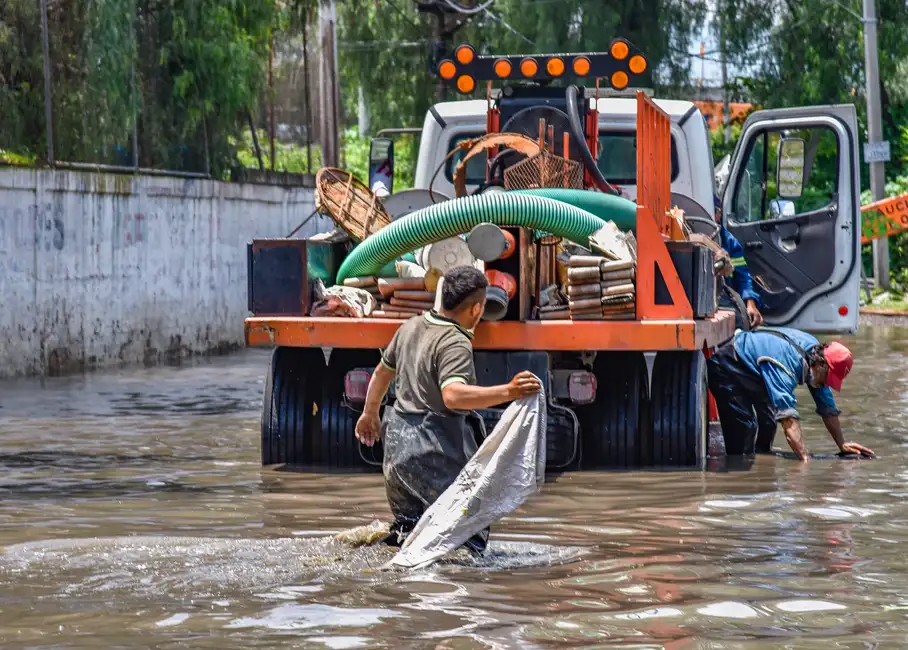
Your basement keeps flooding after heavy rain because water is collecting faster than the soil, foundation drainage, or sump system can move it away, then finding a weak point into the basement. In New Jersey, saturated ground, intense storm runoff, clogged gutters, foundation openings, and failed or undersized sump pumps are common reasons the same basement gets wet again. This guide explains how to identify the likely entry point, reduce repeat flooding, and know when water removal is urgent.
Recurring basement flooding New Jersey homeowners experience is rarely solved by drying the floor alone; the source has to be addressed as well. Why basements flood after heavy rain in New Jersey is a drainage and water-pressure problem that causes water to enter below grade during or after storms.
Why does my basement flood every time it rains in New Jersey?
Basements flood repeatedly in New Jersey when saturated soil presses water against foundation walls or directs runoff toward gaps, low points, and drainage systems that cannot keep up. A storm dropping 1-2 inches of rain can put hundreds of gallons of water around a modest roof and foundation, especially where downspouts discharge beside the house.
Soil conditions vary across the state. Dense or compacted soil drains slowly; a high water table, nearby stream, or low-lying lot can keep groundwater close to the basement floor. In older neighborhoods, settled foundations, worn mortar, and drainage altered by paving or renovations can add another route for stormwater seepage through foundation walls.
Look at the pattern, not just the puddle. Water appearing along one wall after a storm suggests a local entry point, while water emerging at the floor-wall joint across several sides often points to groundwater pressure or an overwhelmed perimeter drain. A floor drain that bubbles or backs up raises a separate possibility: a municipal sewer or household drain problem.
Across the state, our team helps homeowners track down the source as well as remove water; our Water Extraction in New Jersey service is built around getting wet rooms cleared and dried after a flood.
How heavy rain gets through the foundation
Heavy rain causes basement water intrusion when runoff pools near the house, groundwater rises around the foundation, or water pressure pushes through openings in walls and floors. A hairline crack can admit water under pressure, but many leaks start higher up and travel down a wall before collecting at the floor.
Roof runoff and yard grading
One inch of rain on a 1,000-square-foot roof produces roughly 620 gallons of runoff. If a downspout empties next to the foundation, that water can saturate one patch of soil repeatedly. Gutters that overflow at corners add concentrated runoff, and a yard that slopes toward the building sends surface water to the same vulnerable area.
Check whether soil, mulch, a patio, or a driveway slopes toward the house. Even a shallow dip can hold water against a foundation for hours after the rain stops. The problem often appears on the downhill side or beside a walkway that channels runoff toward a basement window well.
Foundation openings and hydrostatic pressure
Water can pass through cracked concrete, porous masonry, failed mortar joints, utility penetrations, window wells, and the seam where the basement floor meets the wall. When surrounding soil becomes saturated, hydrostatic pressure pushes water toward those openings. A visible crack is not automatically the only cause; water can travel behind finishes and surface several feet away.
In older homes around Water Extraction in Newark, a mix of older foundations, dense development, and hard surfaces can make runoff management especially important. If your basement leak recurs in the same storm, note the wall, corner, window, or floor joint where water first appears.
Sump pump and drainage problems
A sump pump can be overwhelmed when inflow exceeds its pumping capacity, the pit fills faster than the pump empties it, or the power goes out. A stuck float, blocked discharge pipe, failed check valve, or frozen or obstructed outlet can also stop a working pump from moving water outside. Test the pump before storm season by pouring water into the pit until the float activates.
Perimeter drains can clog with sediment or roots, and older systems may no longer carry water away effectively. If the pump runs constantly, cycles every few minutes, or cannot lower the pit level, treat that as a warning rather than waiting for the next storm.
How to trace the water's entry point
You can narrow down where rainwater is entering your New Jersey basement by checking for the first wet spot during or immediately after rainfall and tracing the moisture upward and outward. Use a flashlight, take photos, and mark where water first appears; the lowest puddle is not always the entry point.
Start with safety. Do not step into standing water if it is near outlets, electrical equipment, or a breaker panel. If you can inspect safely, use this short checklist:
- Look for darkened masonry, damp streaks, peeling paint, or white mineral deposits along walls.
- Check window wells, basement windows, hose bibs, and pipes that pass through the foundation.
- Watch the sump pit during rainfall and listen for unusual cycling or silence.
- Outside, inspect gutters, downspout outlets, soil slope, and water marks near the foundation.
A dated photo taken before rain and another during the storm can reveal whether a damp patch grows, appears at a joint, or follows a surface route. Record rainfall conditions, which pump was running, and how long the area stayed wet. If water appears from a floor drain or has a sewage smell, avoid contact and keep people and pets out of the affected area.
Ways to stop recurring basement flooding after storms
To stop recurring basement flooding after storms, direct roof runoff away from the house, keep drainage paths clear, maintain the sump system, and repair the entry point rather than covering the stain. Begin outside: clean gutters, extend downspouts several feet from the foundation where the discharge is safe and permitted, and correct obvious low spots that hold water beside the wall.
Then test the pump, check that the discharge line is open, and confirm water is not flowing back toward the house. A battery backup can keep a sump system operating during an outage, but it does not fix a blocked drain or a pump that is too small for the incoming flow. Have a drainage contractor assess persistent seepage or a suspected failed perimeter drain.
Crack repair needs to match the cause and location. A surface coating may reduce minor dampness, but it will not redirect roof runoff or relieve pressure behind a wall. If cracks widen, shift, or appear with bowing walls, stair-step masonry cracks, or doors that suddenly stick, arrange a foundation assessment promptly.
After water enters, quick extraction matters because porous materials hold moisture after visible puddles disappear. Our Basement Water Removal in New Jersey service removes standing water and supports drying, while repairs to grading, gutters, pumps, or foundation drainage address why it came in.
Common mistakes that keep a basement wet
Common basement flooding mistakes in New Jersey include treating the puddle without correcting the water source, sending downspout discharge toward the foundation, and relying on a sump pump that has not been tested. Each can make the next storm look like a new failure when the same underlying condition remains.
- Sealing a wall before checking outside drainage: water pressure remains and can find another opening.
- Discharging a pump beside the house: expelled water can soak the same soil and return to the sump.
- Using a shop vacuum on a large flood: it is slow, and electrical equipment is unsafe around water.
- Closing the basement and waiting: damp drywall, carpet, and stored items can remain wet long after the floor looks dry.
Do not enter a flooded basement if water may have reached electrical wiring or appliances. Avoid running a furnace or other equipment that has been wet; shut off power only from a dry, safe location, or contact the utility or a qualified electrician. For clean-water flooding, remove wet belongings only when access is safe, and keep children and pets away.
When to call a professional
Call a water removal professional in New Jersey when water is spreading, reaches finished materials, returns after pumping, or has been in the basement for several hours. A rapid response helps remove water before it soaks deeper into carpet, baseboards, drywall, insulation, and stored belongings; damp materials can begin supporting mold growth within 24-48 hours.
Call emergency services or your utility first if there is a serious electrical hazard, structural movement, or suspected sewage contamination. For an ordinary rainwater flood, our team can extract standing water, identify affected materials, and set drying equipment where needed. Emergency Water Extraction in New Jersey is appropriate when water is actively entering or the basement cannot wait for routine cleanup.
For typical 2026 water removal work, the cost depends on the amount and depth of water, access, affected materials, and drying needed; a small extraction may run a few hundred dollars, while extensive flooding and structural drying can reach several thousand. We explain the price before work begins. The source repair, such as new drainage or foundation work, is separate from removing and drying floodwater.
Frequently Asked Questions
Why does my basement flood after heavy rain in New Jersey?
Basements most often flood after heavy rain because saturated soil pushes water through foundation openings, surface runoff pools beside the house, or a sump pump and drain system cannot keep up. Check downspouts, grading, wall-floor joints, and the sump pit. If water comes from a floor drain, investigate a possible sewer backup rather than assuming it is groundwater.
Can heavy rain overwhelm a sump pump?
Yes. A pump can be overwhelmed when water enters the pit faster than its rated capacity, or when a power outage, stuck float, blocked discharge, or failed check valve interrupts pumping. Test it before storms by adding water to the pit and confirming that it activates and discharges outside. Frequent cycling or a rising pit level needs attention.
How do I find where rainwater is entering my basement?
Inspect during the storm, because the first damp point usually offers the best clue. Look at windows, wall cracks, pipe penetrations, and the floor-wall seam; then check outside for overflowing gutters and water pooling beside that area. Photograph the wet spot and follow streaks upward, since water can travel behind a wall finish before reaching the floor.
When should I call a water removal company after basement flooding?
Call promptly if water is spreading, has reached carpet or drywall, keeps returning, or may contain sewage; do not wait more than a few hours to start extraction. If water is near electrical equipment, stay out and address the hazard first. Removing moisture early helps limit damage, but the drainage or foundation cause still needs correction.
Get help with Water Extraction in New Jersey
If heavy rain keeps sending water into your basement, New Jersey Water Extraction Pros can remove standing water and help you understand what needs attention next. Call +1 (866) 896-8166 for water extraction help.